Getting attention online has never been easier.
Businesses can launch websites in hours, create social media content in seconds, generate professional-looking graphics with artificial intelligence, and advertise to thousands of potential customers with relatively small budgets.
But there’s another side to that accessibility.
Customers are becoming more cautious.
Before calling a business, requesting a quote, making an appointment, or purchasing a product, people increasingly want to know one thing:
Can I trust this company?
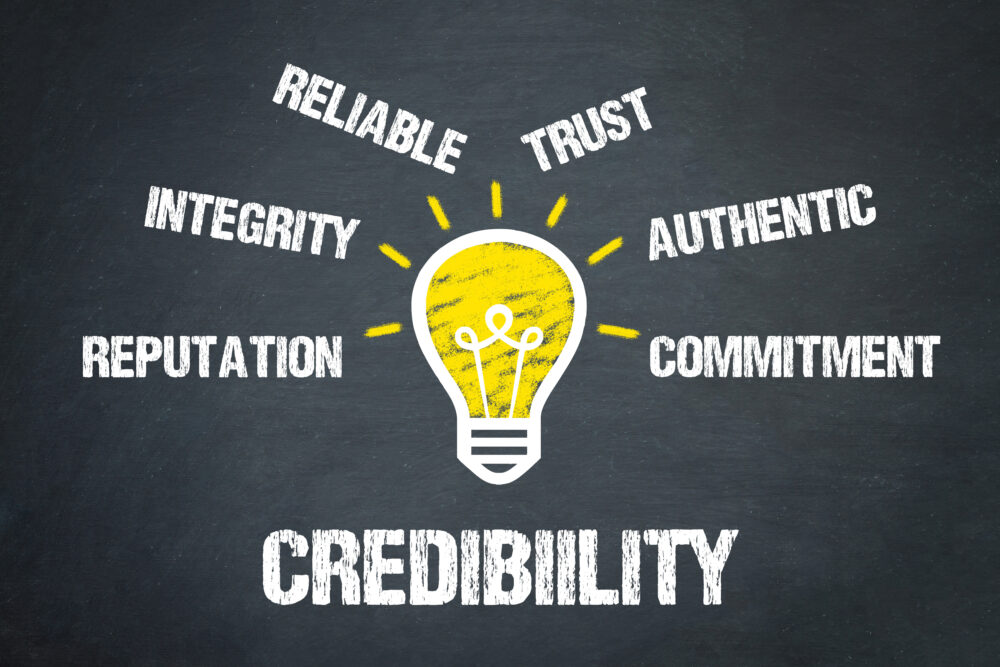
That makes credibility one of the most important parts of marketing today.
A business can have great SEO, attractive social media graphics, and a beautiful website, but if customers don’t trust what they see, all that visibility may never turn into business.
At Thrive & Shine Marketing, we believe successful digital marketing should accomplish more than getting businesses noticed. It should help businesses become recognizable, credible, and trustworthy.
Here’s how businesses can build that trust online.
1. Start With a Professional Website
Your website is often where customers decide whether your business feels legitimate.
Imagine discovering two companies offering the same service.
The first website is outdated, difficult to navigate, missing important information, and hasn’t been updated in years.
The second is modern, mobile-friendly, clearly explains its services, displays current contact information, and makes it easy to reach the company.
Which business would you trust?
Probably the second.
A professional website should clearly communicate:
- Who you are
- What you offer
- Who you serve
- Where you’re located
- How customers can contact you
- Why someone should choose your business
Don’t make potential customers investigate your company just to understand what you do.
Make credibility obvious.
2. Show the Real People Behind Your Business
One of the easiest ways to build trust is also one of the most overlooked:
Show people who you are.
Businesses sometimes hide behind logos, stock photographs, graphics, and advertisements.
Customers want to see the humans behind the company.
Consider sharing:
- Team photographs
- Founder stories
- Employee spotlights
- Behind-the-scenes videos
- Community involvement
- Office photographs
- Customer interactions
This has become even more important as AI-generated images become increasingly common.
Real people create real connections.
3. Keep Your Business Information Consistent
Imagine finding one phone number on Google, another on Facebook, and a third on the company’s website.
Immediately, something feels wrong.
Even innocent inconsistencies can create doubt.
Your business name, address, phone number, website, hours, and service information should remain consistent across your online presence.
Review your information on:
- Your website
- Google Business Profile
- Online directories
- Industry profiles
Consistency communicates professionalism while also supporting local SEO.
4. Customer Reviews Are Powerful Trust Signals
You can tell customers you’re great.
But when customers say you’re great, it carries a different kind of credibility.
Reviews provide social proof that real people have interacted with your company.
Encourage satisfied customers to leave honest reviews.
Then don’t hide those reviews.
Use testimonials throughout your:
- Website
- Social media
- Sales materials
- Email campaigns
- Presentations
When appropriate, respond to reviews as well.
That demonstrates that your business is active and values customer feedback.
5. Don’t Try to Look Perfect
This might sound strange coming from a marketing agency, but overly polished marketing can sometimes feel less believable.
Customers understand that businesses are operated by humans.
Authenticity matters.
A behind-the-scenes smartphone video can sometimes build more connection than an expensive advertisement.
A genuine customer story can be more persuasive than a perfectly designed promotional graphic.
Professional doesn’t have to mean artificial.
Your marketing should look polished while still feeling human.
6. Create Content That Demonstrates Expertise
Trust isn’t built by repeatedly telling people you’re an expert.
It’s built by demonstrating expertise.
Create useful content that answers the questions your customers actually have.
That could include:
- Blog posts
- FAQs
- Educational videos
- Social media tips
- Guides
- Case studies
- Industry commentary
If you’re a contractor, explain common home maintenance problems.
If you’re an attorney, explain legal concepts in understandable language.
If you’re an insurance professional, answer common coverage questions.
If you’re a marketing agency, teach businesses how to improve their marketing.
Helpful content creates credibility before a sales conversation ever begins.
7. Make Contact Information Easy to Find
Customers shouldn’t have to search your entire website for a phone number.
Make contacting your business simple.
Depending on your business, provide:
- Phone number
- Email address
- Contact form
- Business location
- Business hours
- Social media links
Consider placing important contact information in multiple locations throughout your website.
Reducing friction makes it easier for interested visitors to become leads.
8. Display Credentials That Matter
If your business has professional credentials, certifications, licenses, memberships, awards, or recognized affiliations, display them appropriately.
These trust signals help customers understand that your business has established credibility beyond its own marketing claims.
Depending on your industry, these might include:
- Professional licenses
- Industry certifications
- Chamber memberships
- Supplier diversity certifications
- Professional associations
- Awards
Don’t overwhelm customers with logos.
Highlight credentials that genuinely strengthen your reputation.
9. Maintain an Active Social Media Presence
Imagine visiting a company’s Facebook page and discovering its last post was three years ago.
You might wonder whether the business is still operating.
Businesses don’t necessarily need to post every day, but an active social presence demonstrates that the company is alive, engaged, and accessible.
Post consistently about:
- Business updates
- Educational information
- Customer successes
- Blog articles
- Team members
- Community events
- Industry news
Your social media presence becomes another layer of credibility.
10. Respond to Customers
Marketing isn’t finished when someone comments or sends a message.
That’s where the relationship begins.
Respond to:
- Facebook messages
- Instagram messages
- Website inquiries
- Emails
- Reviews
- Comments
Fast, professional communication creates confidence.
If potential customers struggle to get a response before becoming customers, they may assume communication won’t improve afterward.
11. Be Transparent
Customers appreciate knowing what to expect.
Where appropriate, clearly explain:
- Your process
- Service expectations
- Timelines
- Pricing structure
- What happens after contacting you
Transparency reduces uncertainty.
And reducing uncertainty makes purchasing decisions easier.
12. Protect Your Brand Reputation
Your online reputation isn’t something you manage only when something goes wrong.
Monitor what people are saying about your business.
Pay attention to:
- Google reviews
- Social media comments
- Customer complaints
- Online discussions
- Business listings
If someone has a legitimate concern, respond professionally.
Arguing publicly with customers rarely improves a brand’s reputation.
How businesses handle problems often tells potential customers more than the problem itself.
13. Make Your Marketing Consistent
Your website shouldn’t look like one company while your social media looks like another.
Maintain consistency in your:
- Logo
- Colors
- Fonts
- Messaging
- Tone
- Photography
- Overall brand personality
Consistency creates recognition.
Recognition creates familiarity.
And familiarity can contribute to trust.
14. Avoid Generic AI Marketing
Artificial intelligence is an incredible marketing tool.
But businesses should be careful not to automate their personality away.
AI can help:
- Generate ideas
- Organize information
- Draft content
- Analyze data
- Improve productivity
But customers still want your perspective.
Add:
- Personal experiences
- Real examples
- Original photography
- Customer stories
- Industry knowledge
AI should make your marketing team more efficient.
It shouldn’t make your business sound exactly like everyone else.
15. Make Sure Your Online Presence Matches the Real Customer Experience
This is perhaps the most important point.
Marketing creates expectations.
Your business has to fulfill them.
If your website promises exceptional customer service but customers can’t get anyone on the phone, trust disappears.
If advertisements make promises the business can’t deliver, credibility suffers.
Great marketing should accurately represent a great customer experience.
That’s how brands become sustainable.
Trust Can Become Your Competitive Advantage
Businesses often assume customers make decisions based entirely on price.
That’s not always true.
People also consider:
Who do I trust?
Who looks established?
Who seems knowledgeable?
Who responds to me?
Who makes me comfortable doing business with them?
When several businesses offer similar services, trust can become the deciding factor.
Marketing Isn’t Just About Getting Attention
A successful digital marketing strategy can be thought of as a journey:
Visibility → Recognition → Trust → Action → Relationship
SEO helps customers discover you.
Branding helps them remember you.
Content demonstrates expertise.
Reviews create social proof.
Your website establishes credibility.
Customer service turns that credibility into a relationship.
That’s why marketing works best as a complete system rather than a collection of disconnected tactics.
Final Thoughts
The internet has made it easier than ever for businesses to reach customers.
It has also made customers more skeptical.
In a marketplace filled with advertisements, automated content, AI-generated images, and endless options, businesses need more than visibility.
They need credibility.
The companies that consistently show real people, provide useful information, maintain professional branding, collect genuine reviews, communicate clearly, and deliver what they promise will have a powerful advantage.
Because ultimately, people don’t simply choose the business they see first.
They often choose the business they trust most.
At Thrive & Shine Marketing, we help businesses create digital marketing strategies designed to build visibility, credibility, and long-term growth.
From SEO and website development to social media, branding, content marketing, email marketing, and PPC advertising, we help make sure your marketing doesn’t simply get attention—it gives customers a reason to choose you.
Is Your Online Presence Building Trust?
Let Thrive & Shine Marketing evaluate your website, SEO, social media, branding, and overall digital presence.
Ask about our FREE Marketing Evaluation & Custom Marketing Plan.
📞 (954) 205-5031
📧 [email protected]
🌐 marketwiththrive.com
You Thrive. We Make You Shine. ✨